One Second Can Change Everything
IT'S ALL PROBABILITY
One Second Can Change Everything.
Why the next moment of your life is genuinely, mathematically, unpredictable.
in sub-Saharan Africa right now, a child is going to sleep hungry. The family has nothing. The village has nothing. There is no school nearby, no hospital, no road to anywhere that has either. By every conventional measure of probability — by every statistic, every sociological model, every economic forecast — that child's future is already written.
Poverty. Struggle. The same ceiling that trapped every generation before.
And then one day — one specific day, one specific hour, one conversation, one letter, one stranger who says the right thing at the right time — everything changes. That child becomes a president. A billionaire. A person who changes the world.
This is not an inspirational story. This is a probability argument.
I want to make the case — using real mathematics, real people, and real science — that no matter where you are right now, no matter how wrong everything feels, the probability that the next second changes your life is never zero.
Never. Zero. That is not motivation. That is mathematics.
I. The Mathematics of the Next Second
Why probability doesn't care about your past
The Independence of Moments
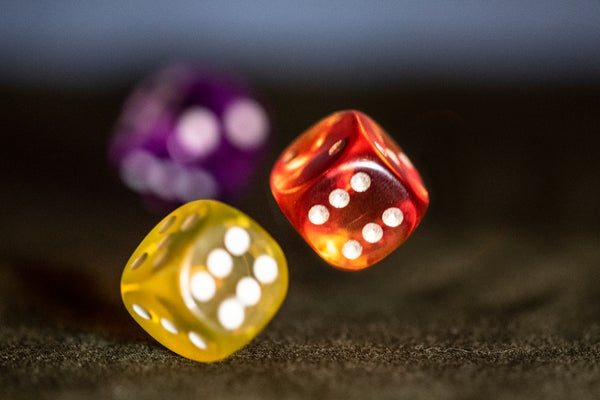
In probability theory, there is a concept called independence. Two events are independent when the outcome of one has no effect on the probability of the other. A coin flip is independent — whether you got heads last time has zero effect on whether you get heads next time. The coin has no memory. The probability resets every single flip.
Your life is not a coin flip. But your next moment shares one crucial property with it: it is not determined by everything that came before.
The past constrains your present circumstances. It does not determine your next moment. The conversation you haven't had yet. The email that hasn't arrived. The person you haven't met. The idea that hasn't occurred to you. None of those have happened yet. Their probability is still open.
Mathematics has a formal way of describing this. The probability of an event B given that event A has already occurred is written:
P(B|A) = P(A∩B) / P(A) — Conditional probability
When A and B are independent — when the past does not control the future — this simplifies to:
P(B|A) = P(B) — The past does not change the probability of the future
The next moment of your life is not fully independent of your past — your circumstances matter, your location matters, your skills matter. But the Black Swan events — the ones that actually change everything — arrive from outside the probability distribution entirely. They are not constrained by your past in the way ordinary events are. They come from the category of the genuinely unexpected.
"The probability that the next second changes your life is never zero. Not for the child in the village. Not for the unemployed graduate. Not for anyone. The next moment hasn't happened yet. Its probability is still open."
II. The Black Swan
Nassim Taleb and the events that come from nowhere
The Theory That Changed How We Understand Probability
Nassim Nicholas Taleb — a former options trader who became one of the most important thinkers on probability and uncertainty — wrote a book in 2007 that spent 36 weeks on the New York Times bestseller list. It is called The Black Swan: The Impact of the Highly Improbable.
The title comes from a historical fact. For centuries, Europeans were certain that all swans were white. Every swan anyone had ever seen was white. The sample size was enormous. The conclusion seemed unassailable. Then explorers reached Australia and found black swans.
One observation. Centuries of certainty — destroyed.
Taleb's argument is this: the most important events in human history — the ones that actually changed everything — were not predicted by anyone. They arrived from outside the expected probability distribution. They were not just unlikely. They were considered impossible. And then they happened.
9/11. The rise of Google. The 2008 financial crisis. The invention of the internet. The fall of the Soviet Union. None of these were in anyone's probability model. All of them changed the world completely.
"A Black Swan is unpredictable, carries massive impact, and after it happens, everyone constructs an explanation that makes it seem like it should have been obvious. The astonishing success of Google was a Black Swan. So was 9/11."
Now apply this to individual lives.
The moment Jan Koum — a Ukrainian immigrant living in a US government-assistance apartment — decided to build a messaging app called WhatsApp. That was a Black Swan moment. Nobody saw it coming. Eight years later Facebook bought it for $22 billion.
The moment JK Rowling — a single mother receiving £69 a week from social security, describing herself as 'as poor as it is possible to be in modern Britain without being homeless' — kept writing a book about a boy wizard despite twelve publishers rejecting it. That was a Black Swan moment. Harry Potter became the bestselling book series in history.
The moment Roman Abramovich — orphaned at age two in a subarctic region of Russia, raised by his uncle — started a small company making plastic toys as a university student. That was a Black Swan moment. It led to an oil empire worth billions.
In every case, the Black Swan arrived from outside what probability would have predicted. It was not visible in the data. It was not in the model. It came from the category of the genuinely improbable — and it changed everything.
III. The Evidence
Real people, real rock bottoms, real Black Swans
The Coordinates Don't Determine the Destination
Oprah Winfrey
Started: Born to a teenage single mother in rural Mississippi. So poor she wore potato sack dresses to school. Children mocked her. No father present. Abused. Ran away at 13.
Ended: Net worth $3.1 billion. The most powerful woman in media for two decades. First Black female billionaire in history.
Howard Schultz
Started: Grew up in the Canarsie housing projects in Brooklyn — government-subsidised housing for families with nothing. Father broke his ankle at work and lost his job with no healthcare, no workers' compensation, nothing.
Ended: Built Starbucks into a global empire. Net worth $2.7 billion. Changed how the world drinks coffee.
Mohed Altrad
Started: Born into a nomadic Bedouin tribe in the Syrian desert. Mother died when he was young — possibly murdered. Grandmother banned him from attending school. Grew up in Raqqa, now capital of ISIS territory. Moved to France with nothing. Ate only once a day as a student.
Ended: Founder of the Altrad Group, one of Europe's largest construction equipment companies. Billionaire. Owner of Montpellier rugby club.
Jan Koum
Started: Immigrated from Ukraine to the US at 16. Could not afford food. He and his mother cleaned houses to survive. Received government food assistance. Applied to work at Facebook — rejected.
Ended: Founded WhatsApp. Facebook paid $22 billion to acquire it. Koum's personal share: approximately $6.8 billion.
Colonel Harland Sanders
Started: Lived in his car at age 65. Had a $105 social security cheque. Was rejected 1,009 times when he tried to sell his chicken recipe to restaurants.
Ended: KFC became one of the most recognised brands on Earth. Sanders' face is still on every bucket.
Six lives — starting coordinates vs final destinations. The gap is where the Black Swan lived.
IV. The Science of the Turning Point
Why one moment can rewrite everything
Chaos Theory and the Butterfly Effect
In 1961, mathematician and meteorologist Edward Lorenz was running weather simulations on a computer. He wanted to re-run a simulation from the middle, so he entered a number he had printed out earlier: 0.506. The original stored value was 0.506127. The difference was 0.000127 — less than one thousandth.
The two simulations started almost identically. They diverged completely within weeks of simulated time.
This discovery — that tiny differences in initial conditions produce wildly different outcomes in complex systems — became known as chaos theory. Lorenz later summarised it with a question: 'Does the flap of a butterfly's wings in Brazil set off a tornado in Texas?'
The answer is yes. Not every butterfly flap causes a tornado. But some do. And there is no way to know in advance which ones.
Human lives are complex systems. One conversation is a butterfly flap. One email opened instead of deleted. One bus taken instead of the other. One decision to keep going instead of stopping. These are the inputs. The outputs are unknowable in advance.
"Chaos theory proves that tiny inputs in complex systems produce enormous, unpredictable outputs. One conversation is a butterfly flap. Some butterfly flaps cause tornadoes. You cannot know in advance which ones."
The Non-Zero Probability — Always
Here is the mathematical core of this entire article.
For the probability of your life changing dramatically to be zero — for it to be literally impossible — every single path to that change would need to be blocked simultaneously. Every possible conversation. Every possible encounter. Every possible idea. Every possible email. Every possible stranger. All of them, simultaneously, impossible.
That is not the world we live in. The world is open. People move through it randomly. Information travels unpredictably. Opportunities appear without warning. Black Swans arrive from outside the model entirely.
The probability is not zero. It cannot be zero. The only question is the size of the non-zero probability — and your job is to behave in ways that make it larger.
P(life changes dramatically) > 0 — Always. For everyone. In every circumstance.
This is not optimism. This is mathematics.
V. How to Make the Probability Larger
The only practical advice in this article
Exposure — The Variable You Can Control
If the Black Swan arrives from outside the expected probability distribution, you cannot predict it. You cannot plan for it. You cannot manufacture it.
But you can increase your exposure to the space where Black Swans live.
Taleb calls this being 'antifragile' — not just surviving uncertainty, but benefiting from it. The way to do this is to maximise the number of low-cost attempts you make in domains where the upside is enormous and the downside is limited.
Colonel Sanders knocked on 1,009 doors. Each rejection cost him almost nothing. He kept his cost of failure low and his number of attempts high. The 1,010th door was a Black Swan.
JK Rowling sent her manuscript to 13 publishers. Each rejection cost her a stamp. She kept the cost low and the attempts high. Publisher 13 was a Black Swan.
Jan Koum built WhatsApp on nights and weekends while doing other work. The cost of trying was low. The upside was unlimited. WhatsApp was a Black Swan.
"You cannot predict the Black Swan. You can increase your exposure to the space where Black Swans live. Keep the cost of each attempt low. Keep the number of attempts high. The Black Swan will find you."
Applied to your life right now — today — this means:
Send the application. Write the article. Make the phone call. Reach out to the person. Share the work. The cost of each attempt is low. The upside of any single one of them arriving at exactly the right moment is unlimited.
The probability of your life changing in the next second is non-zero. Your job is to keep attempting — to keep generating butterfly flaps — until one of them causes the tornado.
VI. The Village Child
I started with a child going to sleep hungry in a village. No school. No road. No visible path to anywhere.
I want to end there too.
The probability that child's life changes is not zero. It never is. One teacher who arrives. One NGO that builds a school. One scholarship programme that finds the right student. One idea that occurs to the right person at the right time. One Black Swan that nobody predicted — including the child themselves.
Barack Obama's father was from a small village in Kenya. Obama grew up partly in Indonesia, raised partially by his grandparents. By every statistical model, he was not going to be President of the United States.
The model was wrong.
The model is always wrong about Black Swans. That is the definition of a Black Swan.
Your life is not a model. Your future is not a forecast. Your next moment has not happened yet. Its probability is still open.
The village child goes to sleep tonight not knowing that the probability of their life changing is non-zero.
You are reading this article. You know.
Now behave accordingly.
"The probability of your life changing is never zero. Not for the village child. Not for you. The next moment hasn't happened yet. Its probability is still open. Behave accordingly."
— END —
Mystic Quill | Research & Writing by Selva Ganesh K | 2026
mysticquill.blogspot.com


Comments
Post a Comment