HOW ANIME TRANSFORMED A SMALL FISHING VILLAGE INTO A SACRED
HOW ANIME TRANSFORMED A SMALL
FISHING VILLAGE INTO A SACRED
ANIME
PILGRIMAGE SITE
By Selva Ganesh K
mysticquill.blogspot.com

Numazu, Shizuoka Prefecture — 119km from Tokyo, where fishing boats once defined the horizon and mandarin orange farms dotted the hillside
Anime is now a key player
and important part of global pop culture. We all assumed every Japanese town
would be as flashy and modern as Tokyo — but there are still villages and towns
with ageing populations and nothing to do, as youth moves to big cities for
jobs and careers. Numazu was the same — a small but beautiful fishing village,
with mandarin orange farms growing on the hillside, fishing boats dotting
Uchiura Bay, and a view of Mt. Fuji from Shizuoka Prefecture, just 119km from
Tokyo.
With an ageing population
and teens moving to big cities, everyone thought the same thing was going to
happen here as it had in other towns — until 2016. But in 2016, everything
changed when nine anime girls turned the fishing village into a sacred anime
pilgrimage site.

Love Live! Sunshine!!

Aqours — the nine idol girls of Love Live! Sunshine!! whose story mirrored the real struggles of small-town Japan
Love Live! Sunshine!! is
part of the Love Live franchise — a continuation from Love Live School Idol
Project, where 9 girls try to save their school from closing because student
enrollment has fallen too low. To save the school and prove themselves, they
participate in Love Live competitions. They formed a group called Aqours, made
up of 9 unique girls, each with a contrasting personality but sharing the same
goal.
And just like me — it
motivates millions of people who come from small villages or towns who want to
show success and prove that even they can achieve something. That is why otakus
from around the world travel to this sacred site, where their favorite 9
characters worked hard and achieved success in the same Numazu and Uchiura — to
show respect to the very place where those characters lived in the story.
Nine fictional girls carried the weight of a real town's
future. And somehow, it worked.
Before the Sunshine

Mt. Fuji viewed from Numazu — the city was known locally
for its port, seafood, and proximity to the iconic mountain. Internationally,
it was essentially invisible.
Before Love Live!
Sunshine!! premiered, Numazu attracted around 4.02 million tourists in 2015 —
respectable numbers for a mid-size coastal city, but nothing that suggested a
cultural renaissance was coming. The city was known locally for its port, its
seafood, and its proximity to Mt. Fuji. Internationally, it was essentially
invisible.
Everyone assumed that
choosing Numazu was accidental — but it wasn't. It was a well-planned,
deliberate decision to transform the town into an anime destination. The pilgrimage
began before the first episode even dropped. When Numazu was revealed as the
show's setting, there was already a surge in fans visiting places like Uchiura
Bay and the Izu Mito Sea Paradise Aquarium. Locals started noticing strangers
with cameras comparing phone screenshots to street corners. It was strange at
first. Then it became something else entirely.
By 2017, from April to September alone, about 2.90 million
people visited Numazu — an increase of roughly 570,000 from the same period the
previous year.
From Quiet Town to Global Destination
As Numazu had 4.02 million
tourists in 2015 before the broadcast of Love Live! Sunshine!!, it moved up to
4.15 million in 2016. From April to September 2017 alone, about 2.90 million
people visited — an increase of about 570,000 from the same period the previous
year. The city tourism information desk also saw a surge in visitors, with many
sharing how the anime had inspired both their children and themselves.
The rise of tourism
brought a wave of events across Numazu and Uchiura Bay — stamp rallies, 'Find
Our Numazu' campaigns, and various activities designed to inspire otakus to
explore every beautiful corner of the town.

The Locals Didn't Just Welcome It. They Joined It.
This is where Numazu's
story diverges from most anime tourism tales. In most pilgrimage cities, fans
arrive, take comparison photos, maybe buy a keychain, and leave. In Numazu,
businesses developed official partnerships with Love Live — restaurants named
dishes after characters, hotels launched special accommodation packages, buses
were wrapped in anime art, and a stamp rally with dozens of participating
establishments was established across the city.
The city's municipal
tourism infrastructure leaned in completely. The Sannoura Synthesis Information
Centre, originally funded by the municipal tourism budget as a general
resource, became an unofficial headquarters for visiting pilgrims — its entire
building eventually taken over by Love Live! Sunshine!! materials. Even farmers
got involved. JA Nansun, a local farming collective, started selling anime
character goods alongside their famous mikan oranges to draw in more visitors.
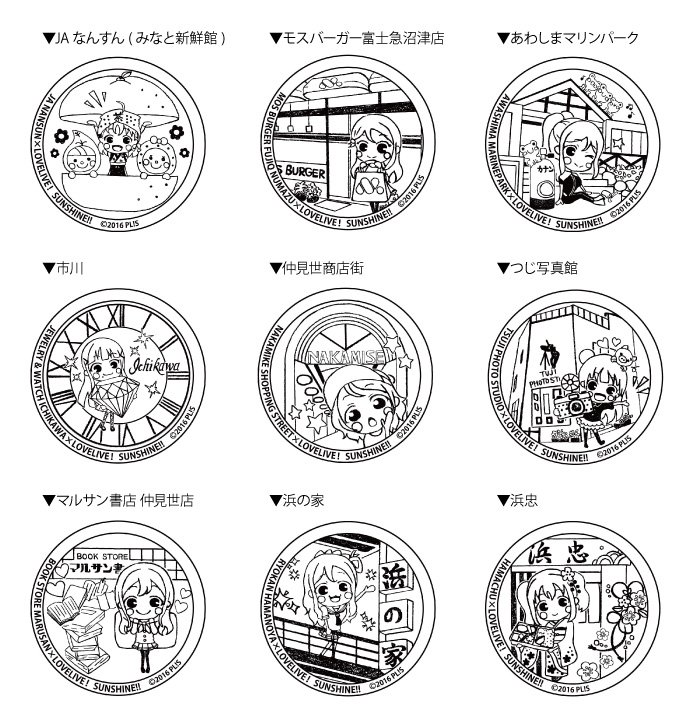
The Numazu Stamp Rally — the initial run of 5,000 booklets
sold out within a month. A total of 20,000 were eventually printed and sold.
The stamp rally became a cultural
institution in its own right. The initial run of 5,000 stamp booklets sold out
within a month. By year's end, 20,000 had been printed and sold. Nine shops
initially participated — by 2018, about 50 shops were part of the rally. A
representative from the Numazu Chamber of Commerce noted something remarkable:
young people were walking through Numazu's shopping districts again.

Local Numazu businesses — restaurants named dishes after
Aqours characters, hotels offering special anime packages, buses wrapped in
Love Live art.
Friction, Vandalism, and a City That Held Its Ground
Not everything was
sunshine. A city councillor, Ryū Ozawa — himself a fan of the series —
acknowledged early reports of visitors approaching students at the real
elementary school that inspired the fictional Uranohoshi Girls' Academy. The
boundaries between fiction and lived reality were getting blurry.
The most visible
flashpoint was the manhole covers. Fan-funded, character-themed manhole covers
had been installed across the city as a community project. They were eventually
vandalized, prompting the city to temporarily pull them. They were reinstalled
four months later — this time, with security cameras.

Love Live! Sunshine!! manhole covers in Numazu —
vandalized, temporarily removed, then reinstalled with security cameras. A city
learning to manage love at scale.
Notices appeared at anime
spots: "Leaving behind anime goods and drawing on things forbidden."
The city was learning, in real time, how to manage love at scale. But the local
consensus remained remarkably positive. Most fans were eager to enjoy the city
and support local residents rather than cause trouble.
Seven Years Later: New Residents, Not Just Tourists
The most extraordinary
part of Numazu's story isn't the tourist numbers. It's what came after. Over
seven years, Numazu's relationship with Love Live! Sunshine!! produced not just
an influx of tourists but something rarer — new permanent residents who chose
to make Numazu their home because of the anime.
The fandom built its own
community infrastructure. European and international fans organised Discord
meetups around Numazu visits, coordinating pilgrimages the same way fans
coordinate around concert tours. Numazu became one of the more traveled
pilgrimage destinations among overseas anime fans, partly due to its
accessibility and the growth of official international hotel and ticket
packages for Aqours concerts.

New residents who moved to Numazu permanently — drawn not
by work or family, but by a nine-girl idol group and the town that became their
home.
And the warmth of the
locals became part of the pilgrimage experience itself. Visitors noted that
Numazu's residents had an exceptional level of friendliness toward strangers —
locals would approach foreign tourists, share their feelings about the
vandalized manhole covers, and engage with genuine hospitality. Numazu held its
first relocation consultation event for Love Live fans — reservations filled up
in 30 minutes.
The anime brought visitors. The town turned them into
neighbours.
Closing
Anime tourism is often
discussed as an economic phenomenon — visitor counts, yen figures, stamp rally
booklets sold. But Numazu's story is something quieter and more interesting
than that. It's about a fishing city that looked at a cartoon, recognized
something of itself, and decided to fully become it.
The fishing boats still go
out at dawn. The mikan farms are still on the hills. But now the manhole covers
glow with the faces of nine idol girls, the buses carry their smiles through
town, and somewhere in the city, a person with similar dreams — from Thailand
or Germany — is standing at a street corner, holding up their phone, finding
the exact angle from episode three.
Numazu didn't just host an anime. It became one.
.


Comments
Post a Comment